Lamb Biryani
The King of Indian Rice Dishes
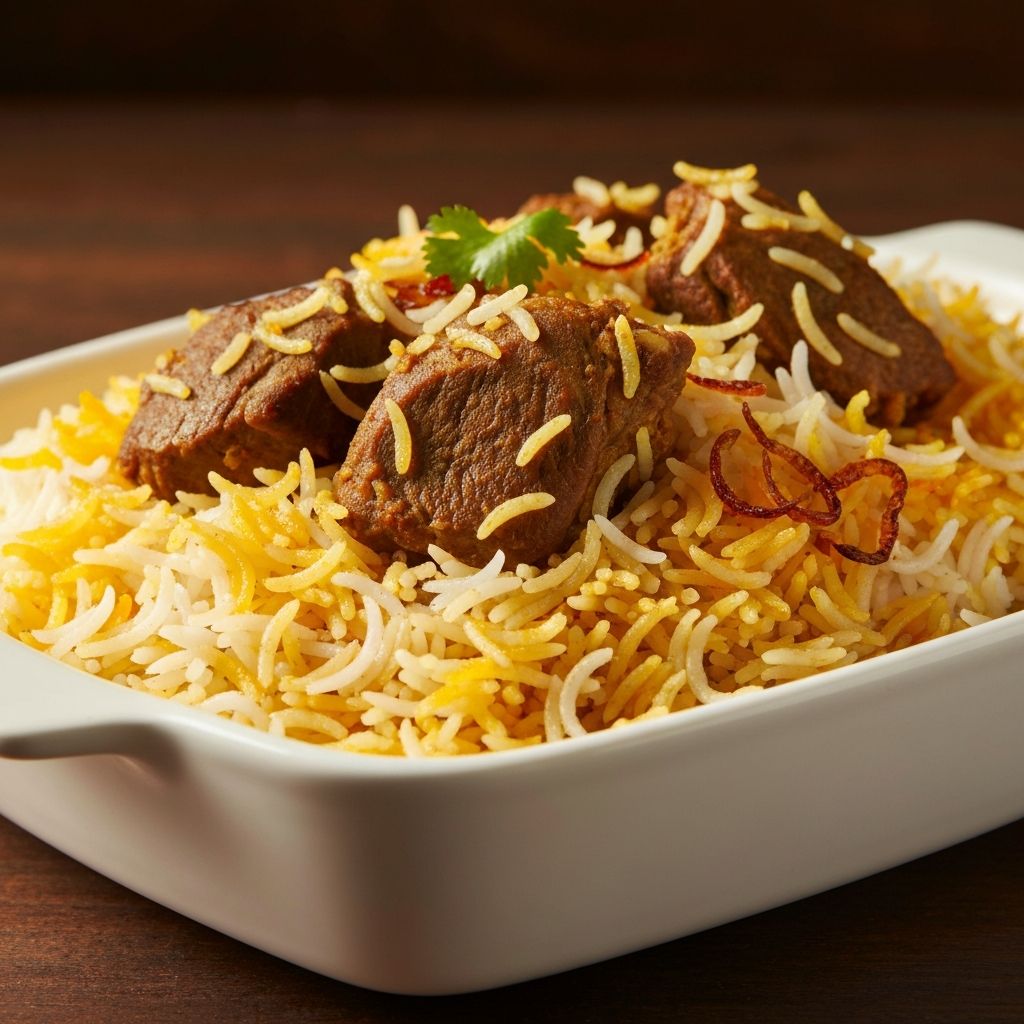
Biryani is the crown jewel of Indian cuisine. A dish born in royal Mughal kitchens that remains the star of weddings, celebrations, and special moments. Layers of saffron-perfumed basmati rice, tender lamb marinated for hours, and spices that tell stories of Silk Road caravans. Preparing a good Biryani is an act of love and patience.
recipe.ingredients
- 500g lamb piecesPreferably leg, with some fat
- 400g basmati riceWashed and soaked 30 minutes
- 200g plain yogurt
- 2 large onions, thinly sliced
- 4 garlic cloves, made into paste
- 30g fresh ginger, grated
- 1 teaspoon saffron threadsSoaked in 3 tablespoons warm milk
- 2 teaspoons garam masala
- 1 teaspoon turmeric
- 4 green cardamom pods
- 4 whole cloves
- 1 cinnamon stick
- 2 bay leaves
- Fresh cilantro and mint
- Ghee or clarified butter
- Salt to taste
recipe.nutrition
Per serving
580
recipe.calories
32g
recipe.protein
48g
recipe.carbs
28g
recipe.fat
recipe.history
Biryani traces its origins to the Mughal Empire in the 16th century, with influences from Persian pilaf. The word comes from 'birian' (fried before cooking). Hyderabadi and Lucknowi styles are the most famous, each with distinct layering techniques passed down through generations of royal cooks.
recipe.preparation
- 1
Start by marinating the lamb. Mix yogurt with garlic, ginger, garam masala, turmeric and generous salt. Submerge lamb pieces and rest minimum 2 hours, ideally overnight in refrigerator.
- 2
Fry onions in generous ghee over medium heat until golden and crispy, about 15-20 minutes. Remove half and reserve for garnish. With the other half, add marinated lamb and sear well on all sides.
- 3
Add enough water to cover the lamb, cover and cook on low heat for 45 minutes until tender. Liquid should reduce but not dry out completely.
- 4
Meanwhile, cook rice in abundant salted water with cardamom, cloves, cinnamon and bay leaves. Cook only to 70%, still firm in the center. Drain well.
- 5
In a large heavy pot, place a layer of lamb with its sauce on the bottom. Cover with a layer of rice. Drizzle with saffron milk, melted ghee, and scatter chopped mint and cilantro.
- 6
Repeat layers ending with rice. Pour a bit more ghee on top, seal tightly (you can seal with flour dough) and cook on very low heat for 25-30 minutes.
- 7
Let rest 10 minutes before opening. Serve by gently mixing the layers and crown with the reserved fried onions.
recipe.modeChef
Competition-level Biryani
To elevate your Biryani to the level of Hyderabad's great masters, these are the secrets that make the difference.
- Use aged basmati rice (at least one year old). Grains separate better and absorb more flavor.
- The 'dum' (sealed cooking) is sacred. Seal the pot with flour and water dough so not a drop of steam escapes.
- Add drops of kewra (pandan water) or rose water with the saffron for that authentic intoxicating aroma.
- Fried onions should be almost burnt—that caramelized bitterness is part of the flavor profile.
recipe.tips
- •If you don't have saffron, use a pinch of turmeric mixed with natural annatto coloring for the color.
- •Lamb can be substituted with chicken (reduce cooking time to 25 minutes) or with vegetables and paneer.
- •Prepare the lamb the day before; flavor improves exponentially with rest.
- •If your pot doesn't seal tightly, place aluminum foil between the lid and pot.
recipe.specialTrick
To achieve that 'khurchan' (crispy bottom crust) that connoisseurs adore, increase heat for the last 3 minutes of cooking. You'll hear a slight crackling. That golden, caramelized layer is the patient chef's reward.
recipe.faq
Biryani uses the 'dum' method where rice and meat are layered and slow-cooked together. Pulao cooks everything in one pot. Biryani has distinct layers while Pulao is uniformly mixed.
Chicken Biryani is equally popular. Reduce the meat cooking time to 25-30 minutes since chicken cooks faster than lamb.
The rice should only be 70% cooked before layering. Also, too much liquid or cooking too long during dum will make it mushy. Aged basmati rice helps grains stay separate.
Dum means slow-cooking in a sealed pot. Steam builds up inside, cooking the dish gently while flavors meld. Traditionally, dough seals the lid to prevent steam escape.